
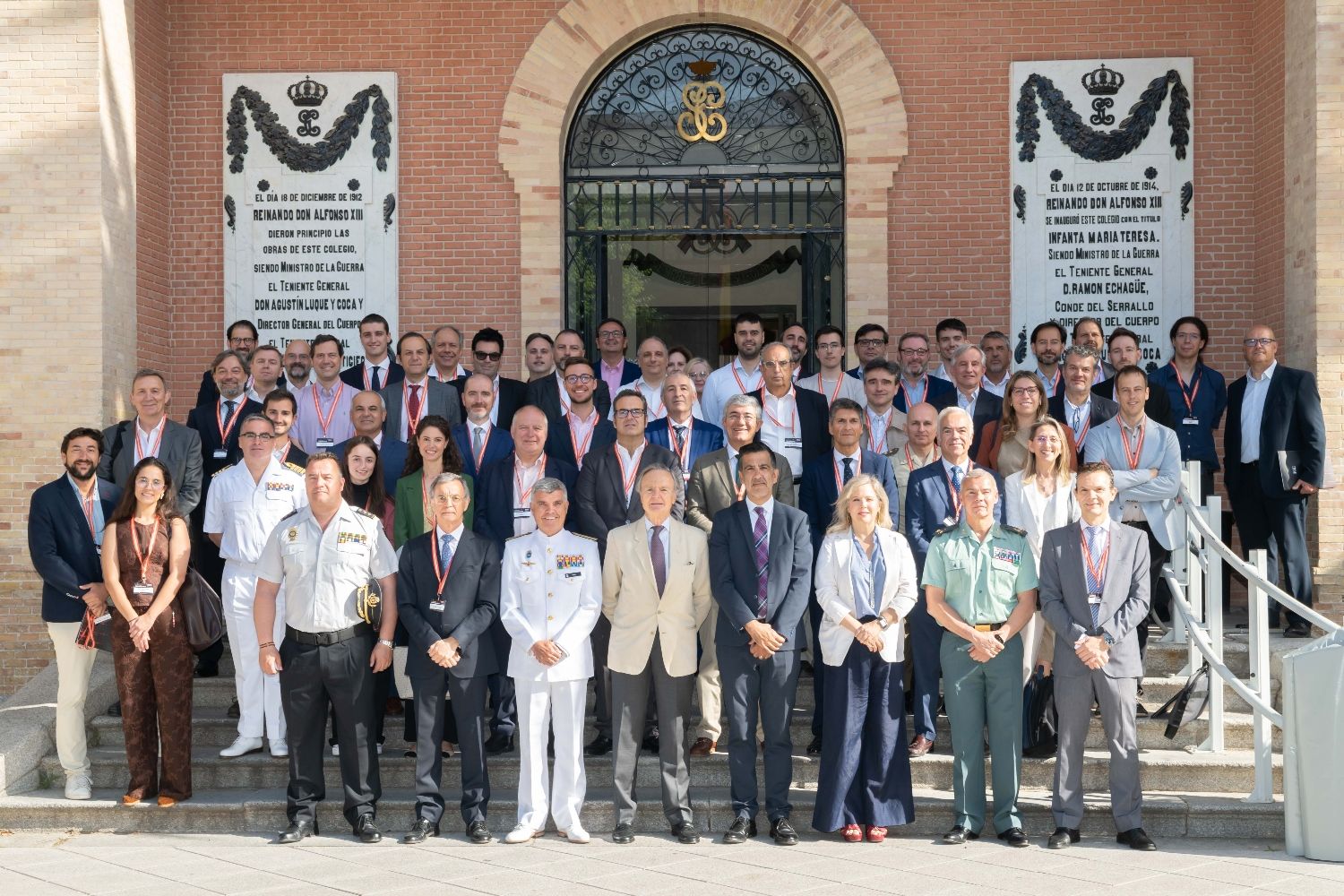
The BeOneSec Chair in Cybersecurity and Cyber Intelligence took part in yesterday’s panel in Madrid, “Training to Protect: The Talent Challenge in Cybersecurity”, held as part of the 9th Cybersecurity Conference organised by TEDAE under the title “Dual Technologies for a Secure Ecosystem”.
Defence, government and industry in the same room
TEDAE, the Spanish Association of Defence, Security, Aeronautics and Space Technology Companies, brought together representatives of government, the Armed Forces, law enforcement, academia and industry to examine how hybrid threats are evolving and the crucial role that talent, innovation and technological sovereignty play in protecting society as a whole.
The event was opened by Ricardo Martí Fluxá, President of TEDAE, who framed cybersecurity as more than a technological matter: for him, it is about defending the rights and freedoms of democratic societies
Andrés Ruiz Vázquez, Deputy Director General for Digital Security at the Secretary of State for Telecommunications and Digital Infrastructure, highlighted the maturity of Spain’s cybersecurity ecosystem.
Vice Admiral Javier Roca Rivero, Commander of the Joint Cyberspace Command, then delivered the keynote “Cyberspace as an Operational Domain: Strategic Challenges for a Secure Future”.
The first panel focused on cybersecurity and cyber defence in the face of hybrid threats. Speakers from the EMAD (Defence Staff), the National Police, ENISA, CESTIC and the Guardia Civil agreed on the need for coordinated responses across the strategic, operational and technological levels.
Talent at the heart of the debate
Talent was the common thread running through the whole conference, and it had a panel of its own: “Training to Protect: The Talent Challenge in Cybersecurity”.
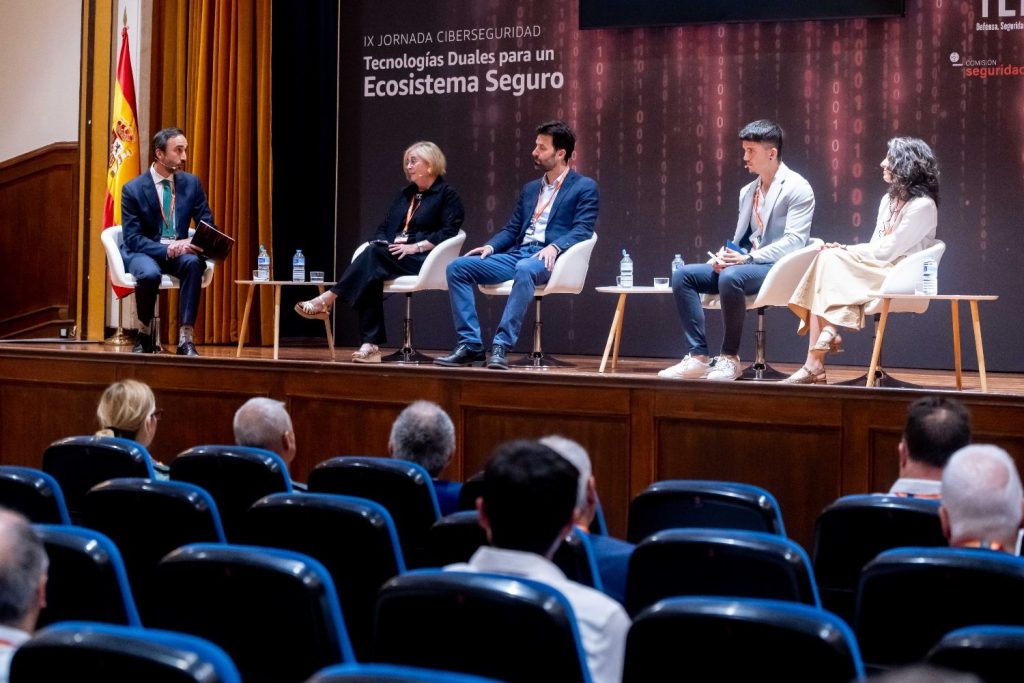
The session was moderated by Enrique González, Deputy Editor of Red Seguridad. The panellists were Ana Ayerbe, President of RENIC; Víctor Gomis, International Business Development at LuxQuanta; Enrique Tomás Martínez, pre-doctoral researcher at the CyberDataLab of the University of Murcia; and Sara González, CMO of BeOneSec and representative of the BeOneSec Chair in Cybersecurity and Cyber Intelligence.
The discussion centred on the need for tailored training, on inspiring new vocations, and on collaboration between companies, universities and research centres to train the specialist profiles the cybersecurity sector actually needs.
Sara González described the work of the BeOneSec Chair: “Cybersecurity talent can’t be improvised, and it can’t be trained at the last minute. It is built over years of joint work between university and industry, helping researchers tackle real problems. That is exactly what we do at the BeOneSec Chair: we train talent capable of sustaining the cybersecurity of critical infrastructure.”
The conference went on with panels on innovation, strategic resilience and technological sovereignty, featuring speakers from CDTI Innovación, the Barcelona Supercomputing Center, INCIBE, Renfe and the Eclipse Foundation. It closed with a session on practical, day-to-day applications of cybersecurity.
The closing remarks were given by Manuel Izquierdo, Deputy Director General for Information and Communications Systems for Security.
The Chair’s presence at a forum of this calibre confirms its standing as a reference point in supporting innovation and specialist talent in cybersecurity, and shows that its outlook is shared by government, the Armed Forces and industry.

